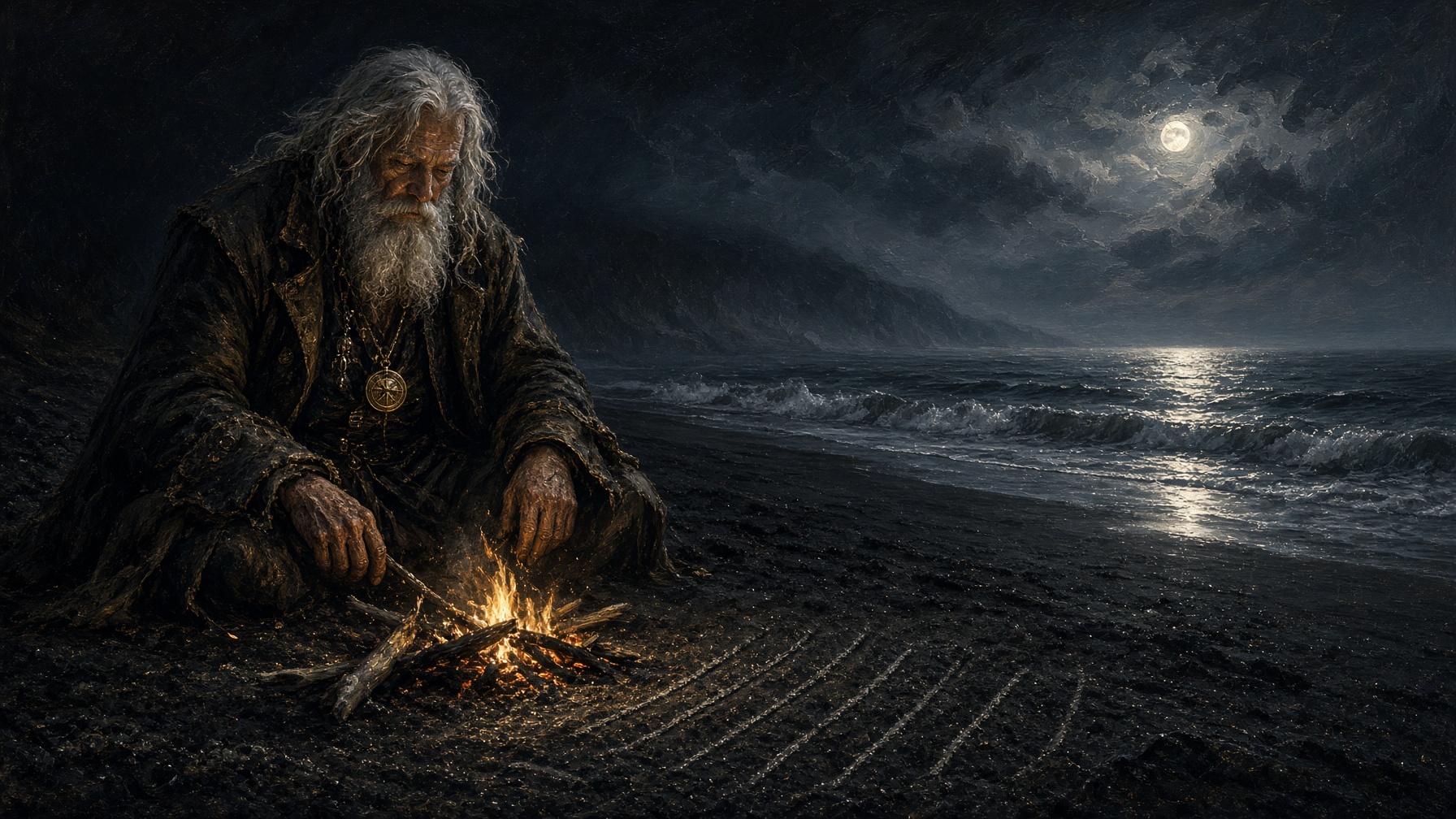
The fire on the beach
The sea was unusually quiet that night. Not calm. Quiet. There is a difference.
A small fire burned between us. Across from you sat an old pirate. Not the sort painted on tavern walls. There was no grand coat. No polished sword. No crown. Just an old weather-beaten man with hands that looked like they had spent a lifetime fighting rope, timber and storms.
His beard was silver. His coat smelled of salt. Around his neck hung a tiny brass compass. He had not spoken for several minutes. He was staring toward the horizon.
Then he said: “Have you ever wondered why some men spend their whole lives chasing treasure?”
You smiled. He didn't. He reached down and drew seven lines through the sand. Seven seas. Seven journeys. Seven ships. Then he looked at you.
“People tell the story wrong. The treasure isn't the beginning. The treasure is the last thing.”
They called him many things. Captain. Rebel. Thief. Fool. King. But before any of those, he was nobody. He had no ship. No crew. No money. And no one who believed he would ever leave that beach.
He smiled. “But he did.”
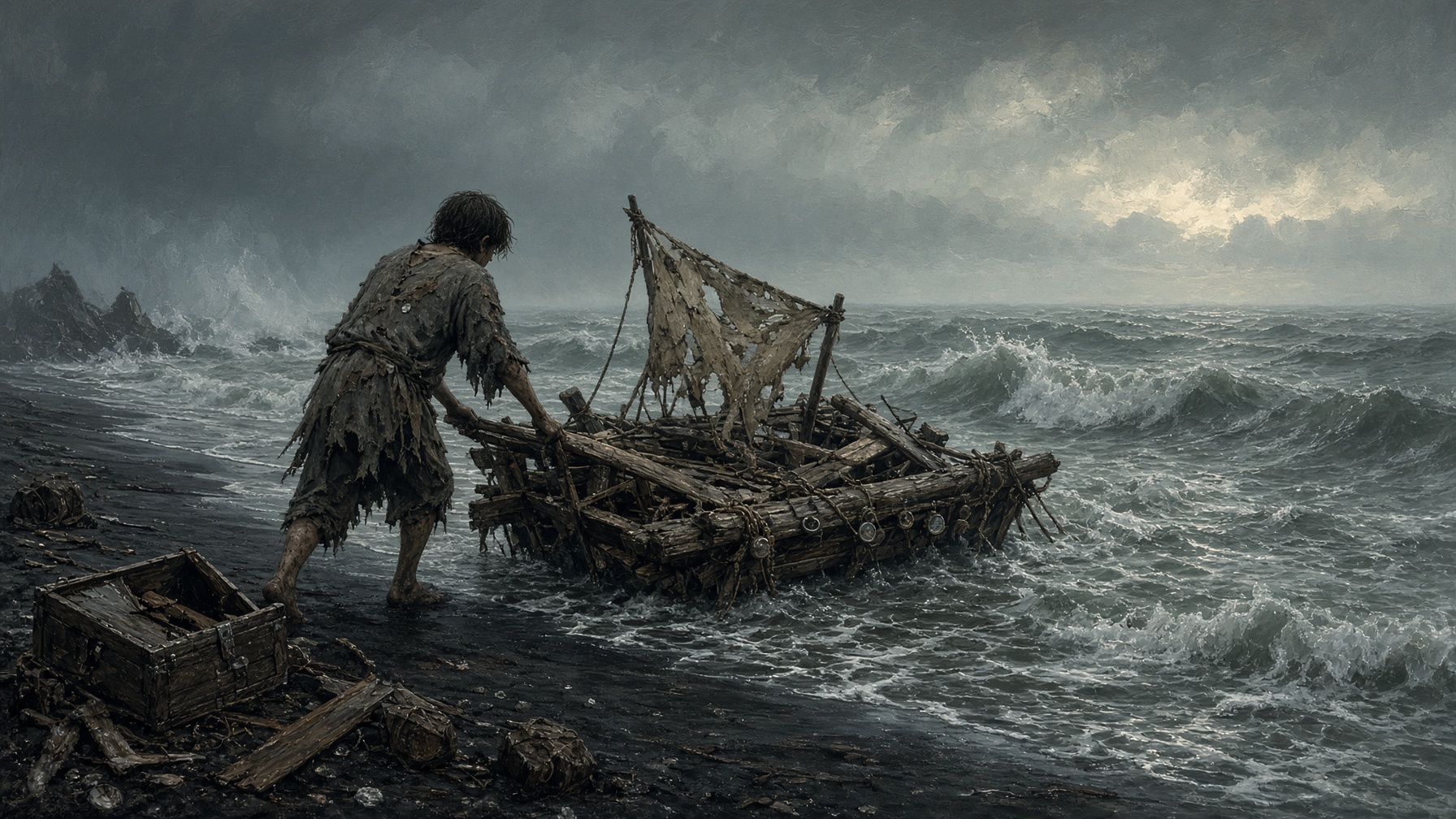
Chapter I
Bronze
The Boy With Nothing
The plank
Every great ship begins as something small enough for one person to push into the water.
There are many ways to lose everything. My uncle's way was simple. He was thrown overboard.
No dramatic mutiny. No cannon fire. No sword fight. No final speech. At dawn they took his small bag, his boots and the few coins he had saved. The captain looked at him. “Go.” That was all.
He knew knots. He knew currents. He knew how to read clouds. He knew how to climb rigging in a storm. None of that mattered. The sea belongs to no captain. And neither does a dream.
He walked until the houses disappeared, until the roads disappeared, until there was only sand, rock and ocean. That evening he found a broken length of timber. Then another. The next morning, rope. Three days later, a torn sail.
Bottle caps became weights. Rope became rigging. Scraps of cloth became a sail. Broken timber became a frame. People laughed. They called it rubbish. He called it a ship.
On the seventh morning he stopped trying to make it perfect. He pushed. The sea took him. That was the first voyage. Not the longest. Not the most impressive. But the most important.
Somewhere behind him, on the beach, the broken pieces remained. He would return to them one day. Not because they were valuable. Because they remembered where he began.
My uncle.
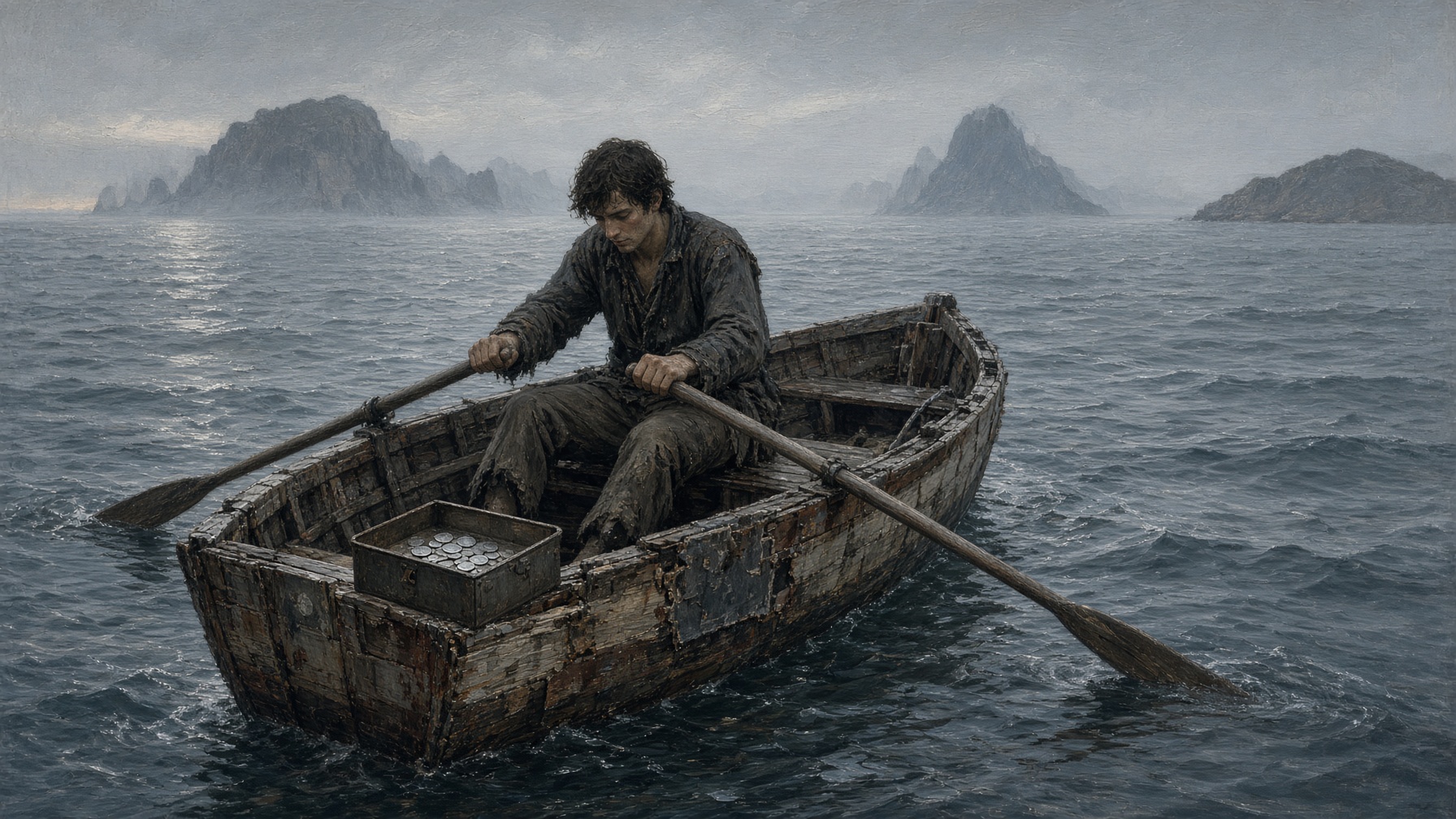
Chapter II
Silver
The Boat That Taught Him Distance
The first boat
A journey is not measured by how fast you move. It is measured by how far you can continue when nobody is pushing you.
The first sea is not the ocean. The first sea is fear.
The raft survived the first day. Barely. It survived the second. On the third he found himself drifting farther from shore than he had intended. Building a vessel and sailing a vessel were two different things. The sea had no sympathy for beginners.
He returned to the island weeks later. Older. Hungrier. Wiser. He carried cargo. He repaired nets. He loaded barrels. Every evening he placed whatever he had left into a small metal box. He did not spend it. He did not show it. He simply added to it.
Eventually someone offered him an old rowboat. Ugly. The paint almost gone. One side more patch than wood. My uncle opened his metal box. There was enough. Not much. Just enough.
That night he slept inside it. He woke before sunrise. There was no sail. No crew. No flag. Just two oars. He liked it that way. Because oars teach you something the wind never will. Every mile must be earned.
He dragged the rowboat onto the sand. Looked at it. Then looked at the horizon. And whispered: “Again.”
My uncle.
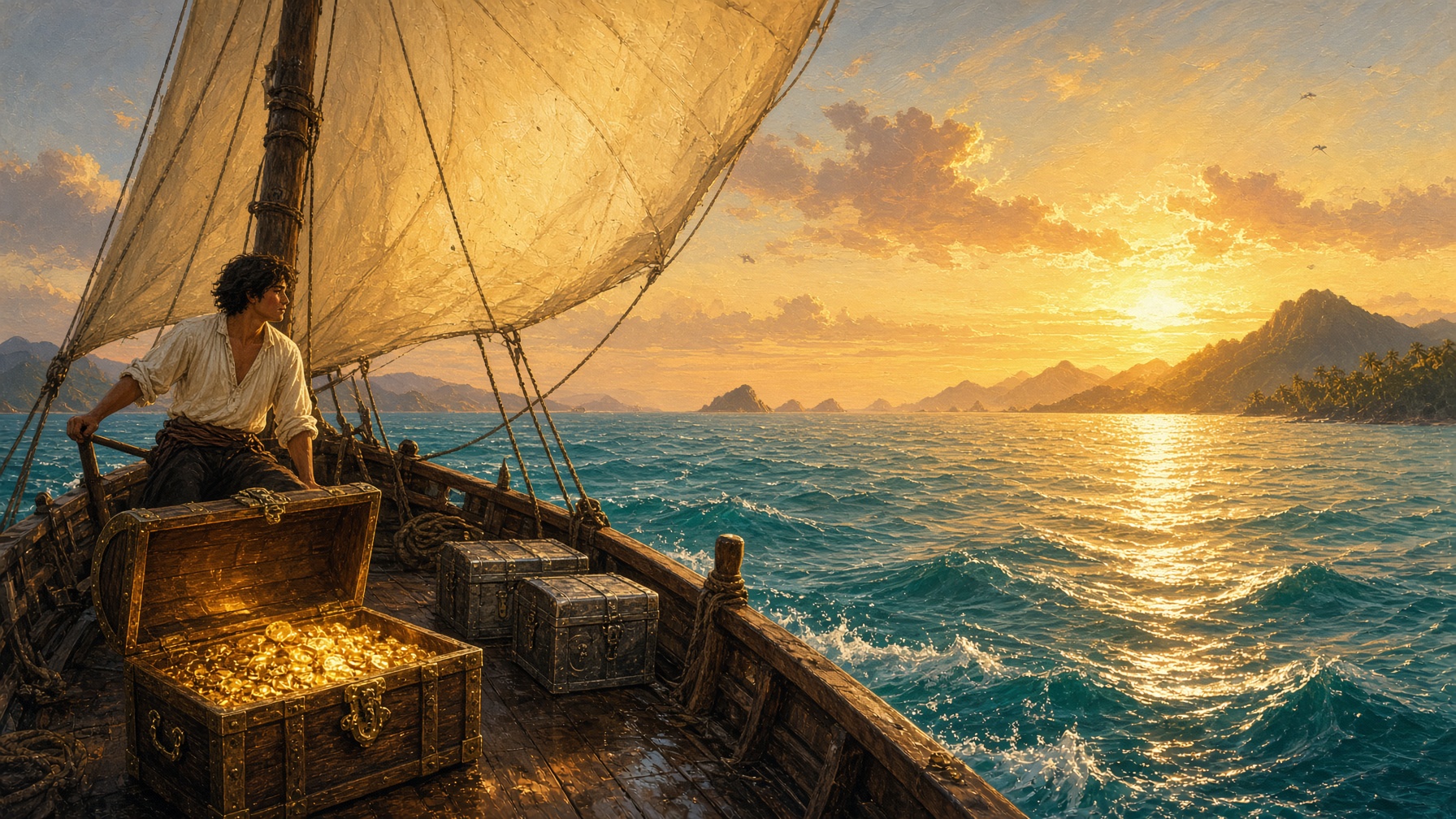
Chapter III
Gold
The First Sail
The first sail
His greatest creation would not be a ship. It would be the people willing to sail with him.
The first time cloth caught the wind, my uncle cried. He would deny that. He denied many things. But this one was true.
For years the sea had been something he had fought. Now, suddenly, it was carrying him. He built a small vessel with one mast. One sail. One purpose. Go farther.
He called no meeting. He held no celebration. There was no crowd. He simply untied the rope. Raised the sail. And waited. The wind came. The boat moved. For the first time in his life, my uncle was not chasing the sea. He was moving with it.
The rowboat had taught him distance. The sail taught him direction. He began exploring routes between islands. He carried goods. He traded. He helped fishermen. He started keeping charts. At first they were crude. Then better. Then beautiful. Every line represented something he had survived.
One afternoon two sailors appeared. “You looking for crew?” My uncle looked at them. “No.” The sailor laughed. “You will.” He was right. The moment one person begins moving toward a horizon, other people start wondering whether they should go too.
And although he did not know it yet, the little chest on the beach had begun to change. There was gold now. Not mountains of it. Enough to prove the life he had imagined was slowly becoming real.
My uncle.
Chapter IV
Platinum
Two Masts
The first crew
Followers ask where the captain is going. Sailors learn how to navigate when the captain disappears.
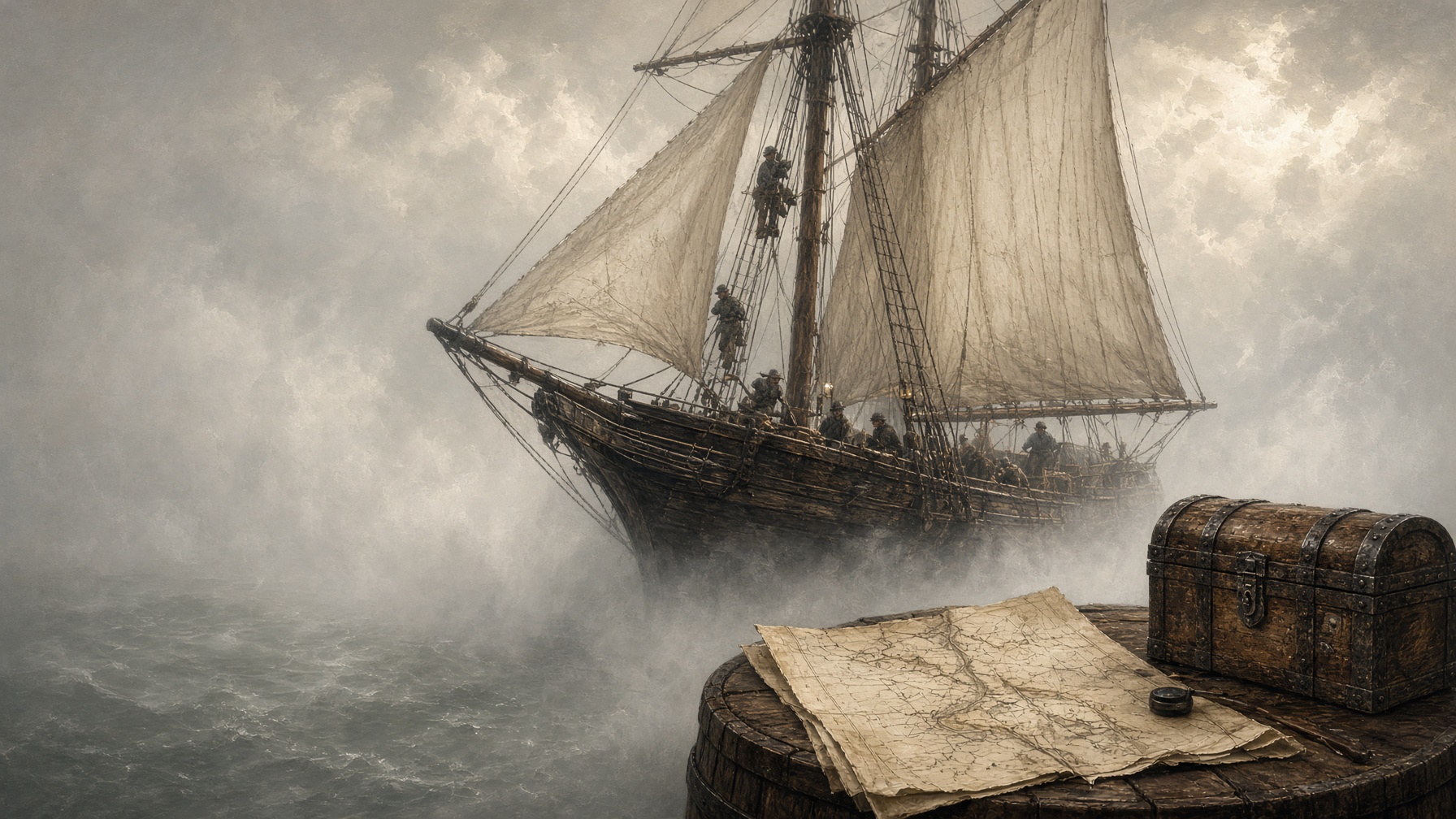
Two masts changed everything. One man can control one sail. Two sails require another pair of hands. This was the first time my uncle understood that the journey could no longer belong to one person.
He needed a crew. But he did not want followers. He wanted sailors. So he chose carefully. The first two were not the strongest. They were not the loudest. They were the ones who had proven they could keep rowing when everyone else stopped.
At first it was awkward. Arguments. Mistakes. Wrong turns. Broken equipment. Bad weather. There were nights where all three wondered whether the whole thing was foolish. But every storm taught them something. The ship became stronger. So did the people.
People would whisper: there is a captain who came from nowhere. He sails without an army. He never leaves a sailor behind if they can still be saved. He pays his debts. He remembers everyone who helped him.
He began giving responsibility away. One sailor learned navigation. Another learned trade. Another became master of the rigging. The ship no longer depended on one pair of hands. And that was the first real treasure. Not gold. Not silver. Not land. Freedom.
My uncle stood at the rail one evening. Behind him, the crew worked. Nobody shouted for him. Nobody needed him. He smiled. That was when he knew they had become something more than passengers. They were a crew.
My uncle.
Chapter V
Diamond
When the Sea Learned His Name
The ship that earns a name
Kings inherit. I built.
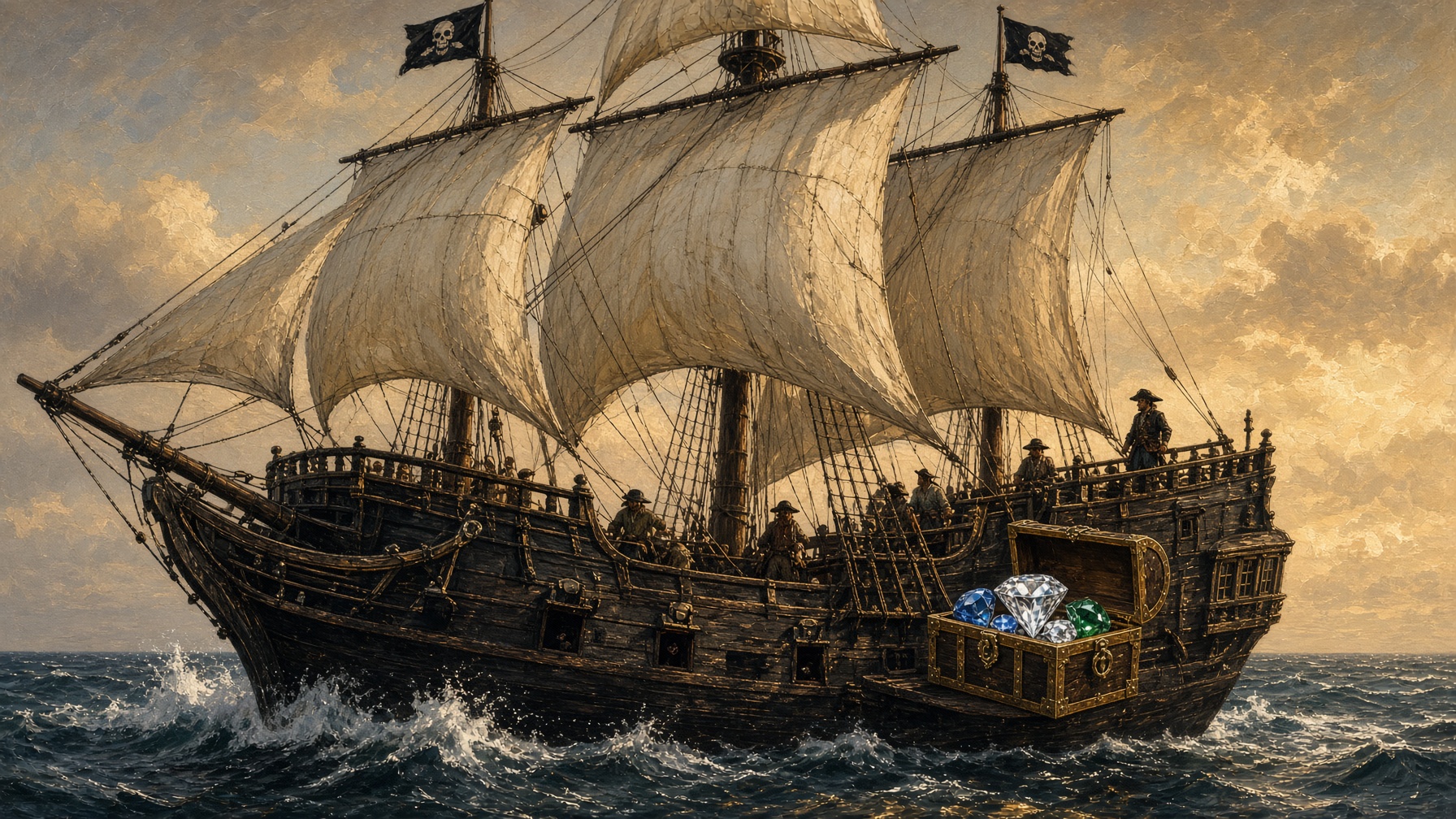
Three masts. That was when everything changed. Not because three masts made the ship enormous. It didn't. My uncle disliked enormous things. Big ships attract attention. Attention attracts enemies.
He preferred something smaller. Faster. Harder to catch. Harder to understand. The new ship could disappear into weather that would swallow larger vessels. The crew knew every rope. Every sail. Every plank. Every hidden compartment.
Nobody joined because they wanted to stand next to a famous captain. They joined because they wanted to become sailors themselves. Some people left. My uncle never chased them. The people who stay because they are afraid to leave eventually become anchors. The people who stay because they believe in the journey become wind.
In one cave along the coast he kept a single diamond. It was not the largest jewel he had ever seen. Not the most expensive. It was simply clear. Perfect. Almost impossible to scratch. A sailor asked why. My uncle answered: because some things are valuable because they survive.
People started calling him names. The Sea Wolf. The Golden Captain. The Man Beyond the Horizon. He ignored them all. Until one night someone called him something he didn't ignore. King. He turned around. “Never.”
The sailor looked confused. “Why?” “Kings inherit,” my uncle said. “I built.”
He became the uncle everyone in our family eventually talked about.
Chapter VI
Elite
The Ship That Could Carry a Future
The fleet becoming a force
You don't need to know where the treasure sleeps. You need to know why we sail.
By now the story had become impossible to hide. Ports knew his flag. Captains knew his name. Some came to join him. Some came to challenge him. Some came because they heard there was treasure. Those were the first to leave.
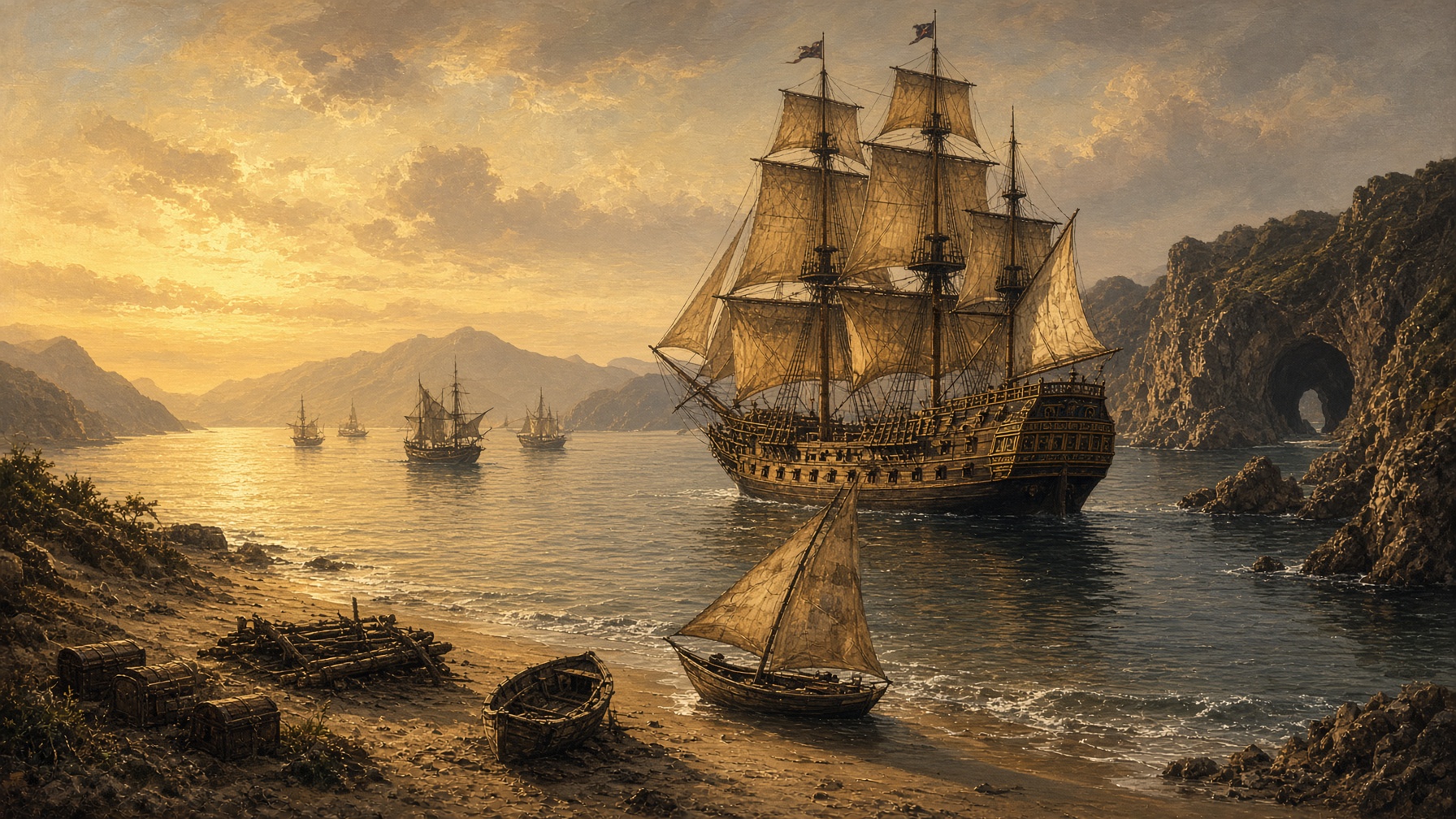
A ship can carry cargo. A crew can carry a future. So he built another ship. Not a warship. Not a floating palace. A working ship. Large enough to carry people. Small enough to remain disciplined. Fast enough to move. Strong enough to survive.
He added one strange rule. Every new sailor had to spend one night on a raft. Just one. No luxury. No proper bed. Just wood, rope and the sea. The older sailors thought it was ridiculous. The younger ones hated it. My uncle never explained. Comfort is something you earn the right to appreciate.
The treasure room had begun to fill. Gold. Silver. Jewels. Old maps. Things that could buy islands. Things that could buy fleets. But my uncle still refused to display most of it. He said wealth was dangerous when everyone could see it. So he hid it. Piece by piece. Island by island. Cave by cave.
Until even his closest crew no longer knew where everything was. That worried them. He only smiled. They thought they understood. They didn't. Not yet.
You might think I knew him.
The old things are never discarded
They become foundations.
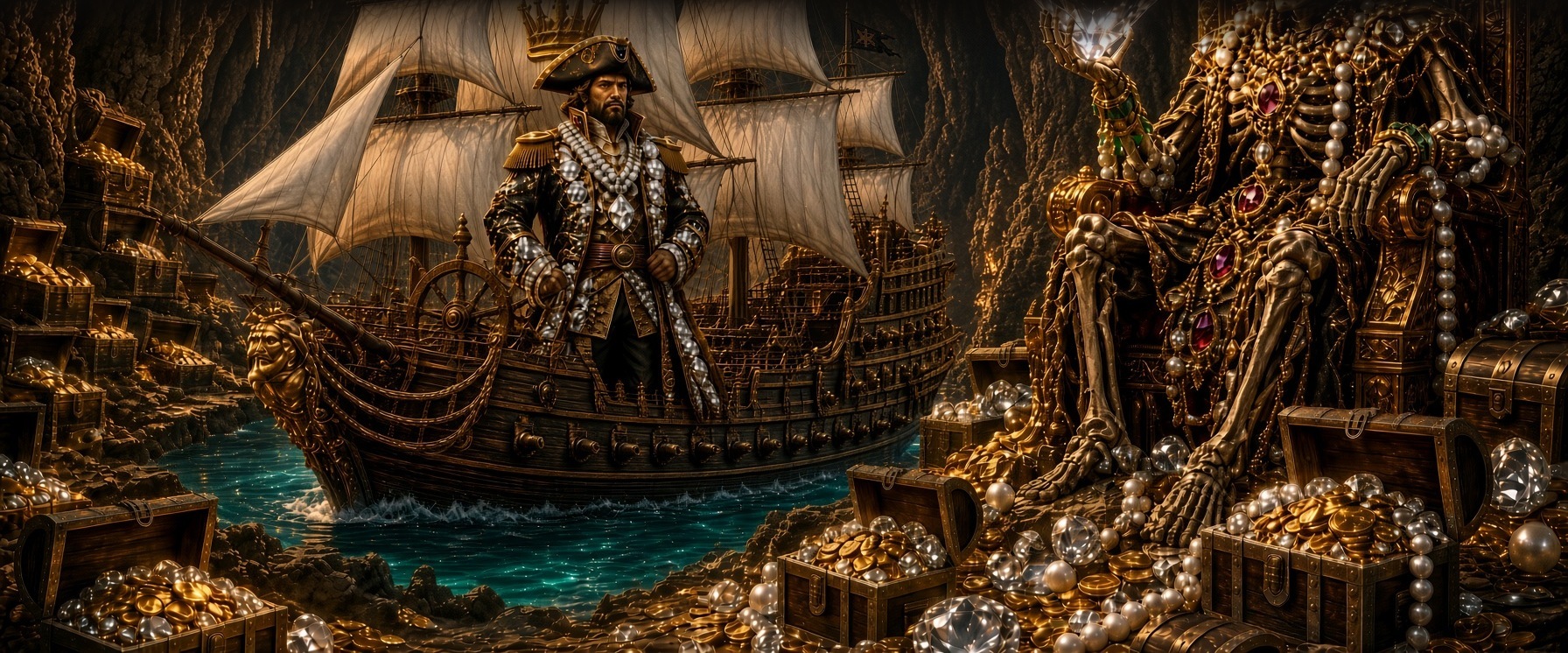
Chapter VII
Sovereign
The Four-Masted Door
The cave, the throne, and the secret
I've already been home.
My uncle built one final ship. Four masts. The largest vessel he had ever commanded. People expected him to celebrate. He didn't. They expected him to raise a new flag. He didn't. They expected him to announce where he was going. He said nothing.
One morning, before sunrise, the four-master left the harbor. Only a handful of sailors went with him. They sailed beyond the waters that appeared on ordinary charts. Then they disappeared. For months. Some said the ship had sunk. Some said he had sailed beyond the world.
Then one morning the ship returned. The captain stood at the rail. Older. Quieter. And beside him was a map. He told them almost nothing. Only this: “I found it.” Someone asked: “Found what?” He looked toward the horizon. “The place where the journey ends.”
He never showed them the map. Instead he took the ship back out. This time alone. The final voyage lasted seven days. On the seventh morning the ship entered a narrow opening between black cliffs. A cave. The water inside was green. The walls glowed. At the center of the cavern stood something impossible. A throne.
Not a royal throne. Something older. Something made from wood, metal, bone and stone. In his hand was the diamond. The same diamond he had kept since the early days. He placed it into the hand of the skeleton seated upon the throne.
The throne was never a reward for the man who had collected the most treasure. It was a test. He had spent his whole life learning how to sail without needing another man's ship. Then how to survive without a crew. Then how to build a crew. Then how to let the crew become independent. And now he had to disappear.
So my uncle removed his coat. He placed it on the shoulders of the captain standing at the rail. A younger man. One he had trained. One who could command without him. “Take them home.” The young captain shook his head. “What about you?”
My uncle smiled. “I've already been home.” Then he walked back into the cave. The ship left. And nobody saw him again.
I never knew the king. Nobody alive remembers the king. But my grandfather sailed under him.
The Secret
The old pirate beside the fire stops speaking. The wind has changed. The waves are louder now.
“So he died there?” The old man laughs. Not loudly. Almost sadly. “That's the version they tell in the taverns.”
He picks up his brass compass. Turns it once. Twice. Then closes his hand around it. “Nobody knows. That's the problem with legends. They become stories because nobody can prove them.”
He points to the sea. “The ships came back. The treasure didn't.”
For generations, people searched. Kings sent fleets. Merchants hired explorers. Pirates hunted maps. Treasure hunters found caves. Empty ones. Always empty.
Until one sailor found a piece of parchment. Only one piece. The corner of a map. On it were seven marks. Seven places. Seven stages. And one final symbol. A throne. But there was one sentence written beneath it.
“The treasure is not hidden from the brave.”
“It is hidden from the unfinished.”
The Last Lesson
You ask him the question every sailor eventually asks. “Where is it?”
The old man smiles. “There.” He points toward the horizon. You look. Nothing. Only sea.
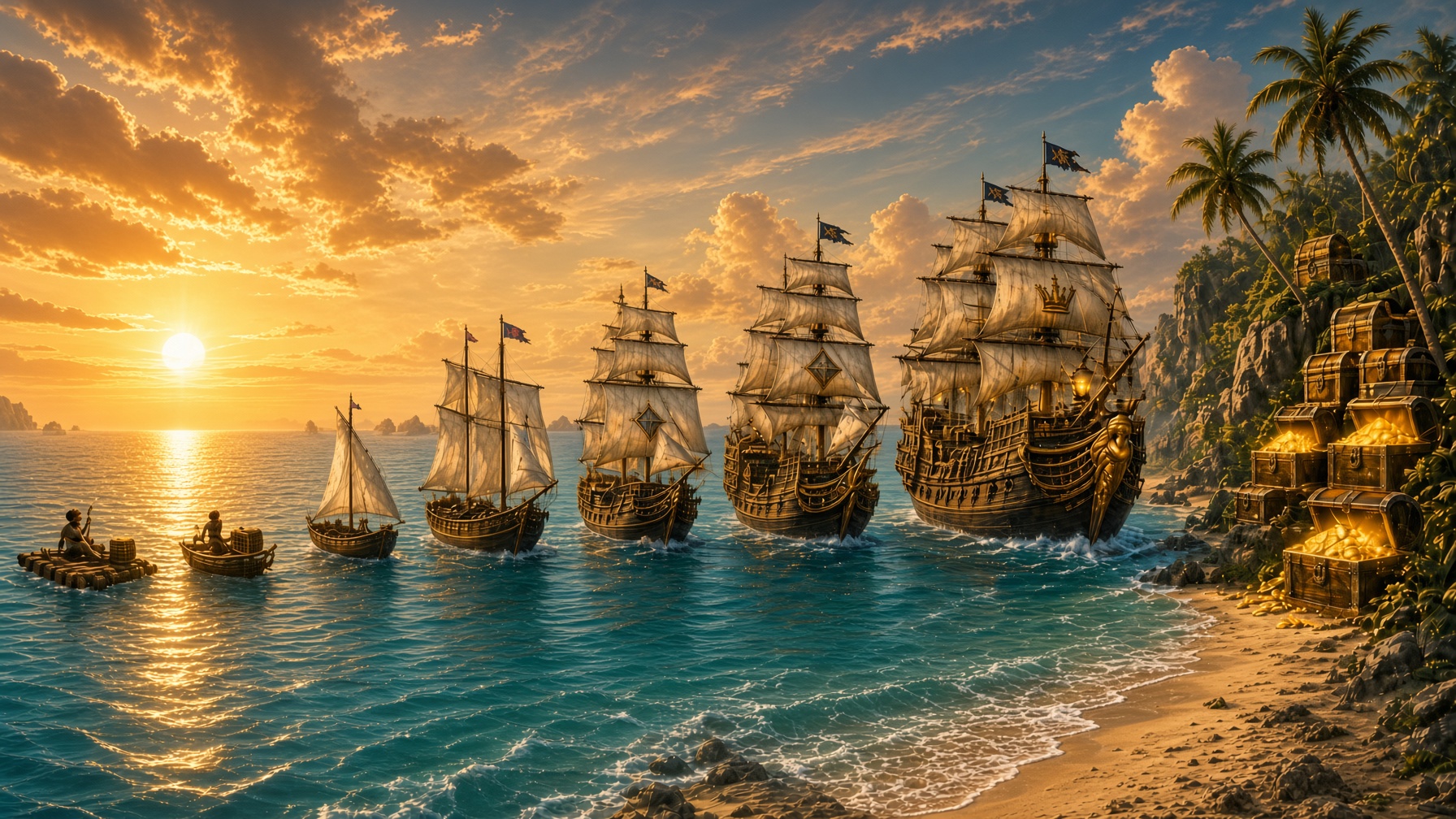
“You don't understand yet. The treasure was never the gold.” He takes the seven lines he drew earlier and connects them. The plank. The boat. The sail. The crew. The ship. The fleet. The cave.
“He didn't hide his fortune because he was afraid someone would steal it. He hid it because he knew exactly what would happen if someone found it too early. They would take the treasure. And leave the voyage.”
“The old man wasn't looking for someone rich enough to open the door. He was looking for someone who had walked far enough to understand why the door existed.”
The Old Man's Last Words
The tide has begun to rise. The old pirate stands. His knees crack. He laughs at himself. “Too old for this.” Then he looks at you.
“Young pirates always ask the same question. When does the voyage begin?” He points to your feet. “You're standing on the beach.”
There is a small piece of wood in the sand. A plank. Broken. Weathered. Almost worthless. The old pirate kicks it toward you. “That's where he started.”
He walks toward the water. You call after him. “Wait. What's his name?”
The old man looks back. For the first time, he smiles. “That's what you're supposed to find out.”
He disappears into the darkness. The fire goes out. The sea remains.
Seven faint lights on the horizon
He hid a fortune where only a finished voyage can stand.
The king is not missing. He is counting who still rows.
He did not hide the treasure from the world.
He hid it from those who had not finished the journey.
“So… are you coming aboard?”
Leave a mark
The harbor call
“Every voyage starts with a name.”